

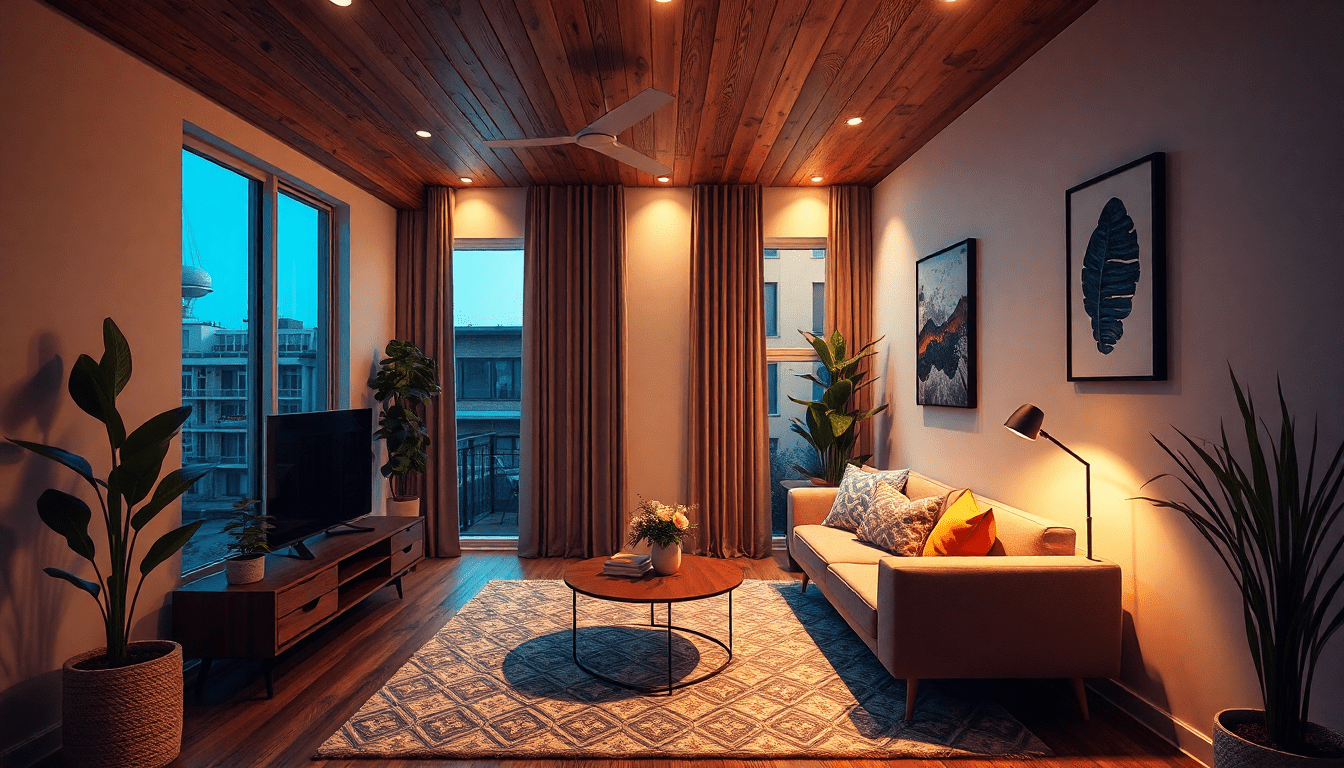
Discover how AI-driven ambient lighting transforms small spaces into flexible, energy-efficient havens for modern living. This expansive guide dives into modular LEDs, smart automation, and design strategies tailored for tiny homes, micro-studios, and compact apartments.
Why Tiny Homes Demand AI-Driven Ambient Lighting
- Maximize perceived space with layered lighting: ambient, task, and accent to carve zones without walls.
- Smart scheduling and occupancy sensing reduce waste while preserving mood and usability.
- Adaptive scenes simplify daily routines in tight floorplans, from morning routines to movie nights.
The Promise of Modular LEDs for Flexible Small Spaces
Modular LEDs are the backbone of adaptable tiny-home lighting. They offer plug-and-play flexibility, slim profiles, and scalable layouts that tuck into coves, under cabinets, and along architectural edges. Key benefits include tunable white, high color accuracy, and minimal heat generation—vital for compact interiors where space and comfort matter.
- Universal connectors enable rapid reconfiguration as needs evolve
- Edge-lit strips, puck modules, and micro-downlights suit curved walls and tight corners
- Seamless interoperability with smart hubs and voice assistants
AI-Powered Energy Efficiency: Daylight Harvesting to Smart Dimming
Artificial intelligence optimizes brightness, color temperature, and scheduling to minimize energy use while preserving ambience. Daylight harvesting sensors measure natural light levels and adjust artificial output accordingly, while occupancy sensors ensure lights are on only when rooms are in use.
- Smart dimming preserves ambiance with minimal wattage
- Energy-use dashboards quantify savings and environmental impact
- Pre-programmed energy profiles align with seasons and occupancy patterns
Design Principles for Tiny Interiors: Creating Rooms with Light
- Layer light to define zones—ambient for atmosphere, task for usability, and accent for focal points
- Keep surfaces uncluttered with recessed, cove, or wall-washing fixtures
- Strategically choose color temperatures: warm whites for coziness; neutral to cool whites for focus
- Leverage mirrors and reflective surfaces to bounce light and enlarge perceived space
- Use directional lighting to sculpt shapes and highlight architectural features
Color Temperature, CRI, and Mood: Guiding the Eye
Color temperature and high CRI lighting influence mood, productivity, and perceived room size. For tiny homes, a flexible approach works best: warmer temps in living zones and cooler temps near workstations. AI-driven tunable LEDs enable smooth transitions across scenes.
- CRI (color rendering index) matters for textiles, artwork, and furniture textures
- Tunable white (2700K–6500K) supports seasonal and time-of-day changes
- Scene presets for “Cozy Evening,” “Focused Morning,” and “Movie Night” automate mood shifts
Smart Lighting Technology: Hardware and Automation, at a Glance
Modern tiny-home lighting blends hardware with software to deliver responsive environments. Core components include modular LED modules, drivers, sensors, and a central smart hub or app integration.
- Voice control and mobile app automation for effortless scenes
- Occupancy, daylight, and scene-based sensors for intelligent adjustments
- Calendar-aware routines to adapt lighting for hosting, work, and rest
Practical Setup: Installation, Wiring, and Safety Tips
Installing AI-driven lighting in a tiny home should prioritize minimal invasiveness, future upgrades, and fire safety. Plan around furniture layouts, outlets, and battery or solar charging constraints for off-grid spaces.
- Start with a central hub and a few modular LED zones that cover living, cooking, and sleeping areas
- Prefer low-profile, recessed fixtures to preserve surface area and airflow
- Use wireless dimmers or hub-based controls to reduce in-wall wiring
- Ensure components are rated for indoor use and meet local electrical codes
Use Cases: Apartments, Vans, Micro-Studio, and Shared Loft Scenarios
Different tiny-space habitats demand tailored lighting strategies. Below are practical setups that maximize comfort and efficiency across common micro-living environments.
- Small apartment: under-cabinet modular LEDs, ceiling coves, smart bridge for routines
- RVs and campers: low-profile modules, battery-aware dimming, solar charging
- Micro-studios: zoning with light walls, adjustable task lighting at multi-use furniture
- Co-living or shared spaces: programmable scenes to accommodate different residents
Seasonal Design Trends for Ambient Lighting in Tiny Homes
- Winter: layered warmth with long-wavelength tones to create cozy interiors
- Spring: brighter, daylight-mimicking scenes to refresh small spaces
- Summer: cooler tones for focus and daytime energy, with soft ambience for evenings
- Seasonal transitions: AI-adapted palettes synced to daily light cycles
Maintenance, Durability, and Sustainability
Choose LED modules rated for long lifespans, low heat, and recyclable materials. AI-powered alerts help preempt failures and simplify replacements, while modular components ease upgrades without reworking wiring.
- Modular components simplify replacement and expansion
- Recyclable materials and energy-conscious manufacturing reduce environmental impact
- Smart dimming reduces heat and extends fixture life
Accessibility and Safety in AI Lighting
Accessible lighting design ensures comfort for all ages and abilities. Consider glare control, even lighting levels, and intuitive voice/app controls that accommodate mobility limitations and cognitive load.
- Consistent luminance to prevent eye strain in small spaces
- Easy-to-find controls and fail-safes for outages
- Color-temperature options that support aging eyes and readability
Case Studies: Real-World Tiny Homes with AI Lighting
Several tiny-living projects demonstrate how modular LEDs, smart controls, and thoughtful design deliver dramatic improvements in comfort and efficiency. Case studies highlight layout choices, energy payback, and user satisfaction.
- Urban micro-apartment: daylight-harvesting skylight integration with wall-wash accents
- Bohemian tiny house: warm, layered lighting that shifts with time of day and hosting needs
- Fifth-wheel RV conversion: battery-aware lighting and solar charging for off-grid living
ROI and Energy Savings: The Numbers Behind the Glow
Beyond comfort, AI-driven lighting delivers measurable savings through reduced electricity use, longer LED lifespans, and optimized energy plans. A well-designed system can significantly shorten payback periods in tiny homes where every watt matters.
- Energy dashboards show monthly and seasonal savings
- Lower cooling loads thanks to cooler peripheral lighting
- Reduced replacement costs due to modularity and longer LED lifespans
Future-Proofing: What’s Next in AI-Driven Lighting
As sensors, AI, and connectivity evolve, tiny-home lighting will become more predictive, context-aware, and visually seamless. Look for deeper integration with smart home ecosystems, more granular daylight modeling, and greater efficiency gains from adaptive luminaires.
- Advanced daylight modeling for precise indoor light planning
- Better interoperability with energy-management systems and microgrids
- Materials and designs that blend fixtures into architecture for ultra-minimal aesthetics
Quick Start Checklist for Your Tiny Home Lighting Plan
- Audit your space: map out zones for living, cooking, sleeping, and work
- Choose a modular LED system that supports tunable white and high CRI
- Prepare for smart controls: hub, app, and voice assistant compatibility
- Plan for daylight integration: windows, skylights, and sensor placement
- Estimate energy savings and budget for expansion as you scale
Conclusion
In compact living, lighting is architectural. AI-driven ambient lighting powered by modular LEDs delivers warmth, efficiency, and adaptability that transform what a small footprint can feel like. By layering light, embracing smart technology, and planning for future upgrades, tiny spaces become versatile canvases for daily life, work, and creativity.
Visit XENTAR for more lighting, decor & furniture curated for modern homes and creative spaces.
Share:
Eco-Conscious Modular Ambient Lighting for Compact Homes: AI-Enhanced Zonal Systems with Biophilic LED Layers for Mood and Efficiency
AI-Driven Ambient Lighting for Small Spaces: Modular, Wellness-Focused LEDs with Smart Zonal Control