

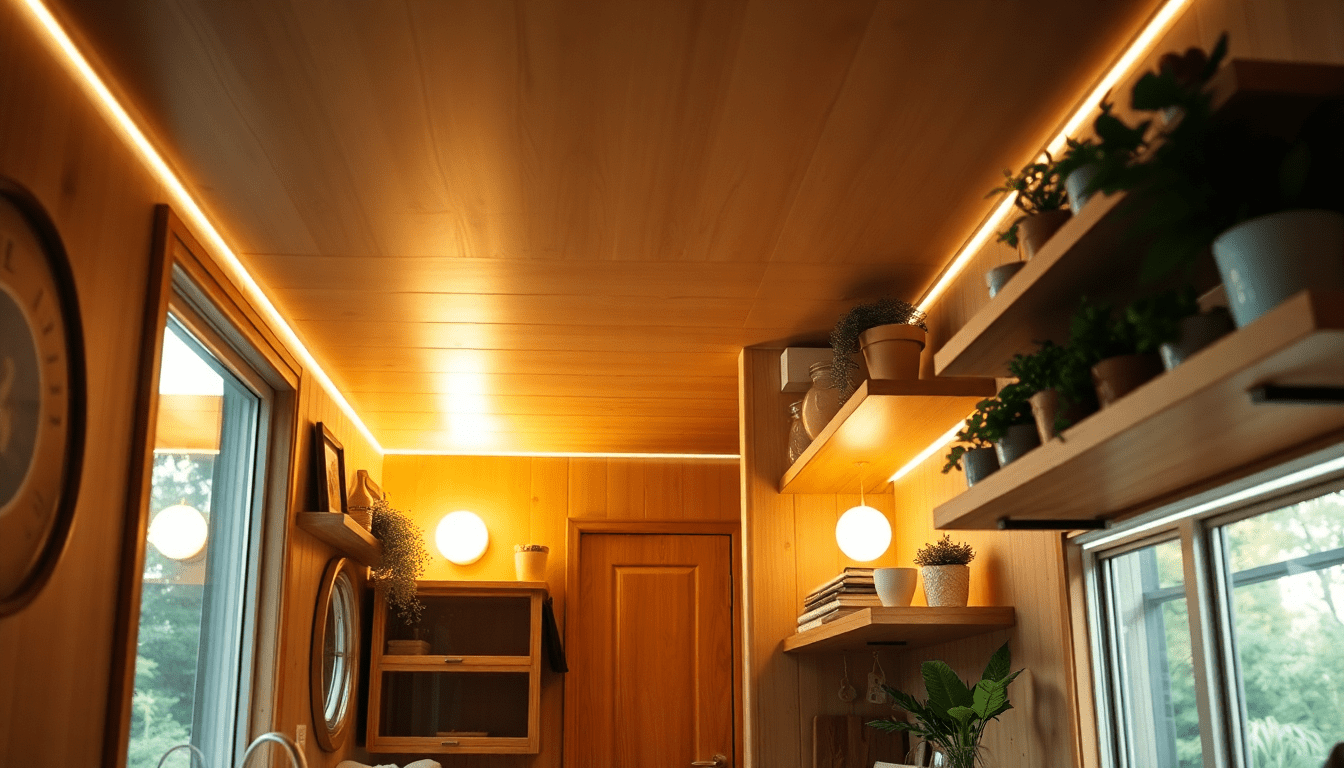
Meta description: A practical guide to layered ambient lighting for tiny homes—modular, biophilic, and smartly controlled for flexible, expansive-feeling spaces.
Understanding the Promise of Three-Dimensional Ambient Lighting in Tiny Homes
Small living areas benefit from lighting that creates depth, defines zones, and supports daily routines without clutter. Three-dimensional ambient lighting layers soft base illumination with directional accents and task lighting to sculpt perception, enhance comfort, and preserve square footage for furniture and movement.
- Depth over glare: layering prevents harsh hotspots and makes walls recede visually.
- Zone definition: separate lighting for cooking, working, lounging, and dressing helps maintain flow.
- Energy-conscious design: combining efficient base layers with strategic accents reduces overall power use.
Layered Modular Systems: The Core Advantage for Tiny Footprints
Modular lighting components empower you to reconfigure, relocate, or expand without a full redesign. Think of a three-layer framework that can be extended along walls, ceilings, and cabinetry as your space evolves.
- Snap-in profiles and channels that run along ceilings, coves, shelves, and behind millwork.
- Interchangeable diffusers and tunable drivers to adjust color temperature and diffusion without replacing fixtures.
- Relocatable power modules and hubs that move with furniture, keeping wiring tidy and accessible.
Biophilic Accents: Nature-Inspired Lighting for Well-Being
Biophilic design in lighting blends technology with nature cues to reduce stress and support circadian rhythms. The goal is lighting that feels organic, warm, and responsive to outdoor light cycles.
- Fixture materials and finishes inspired by natural textures—woodgrain, matte stone, cork, and woven fabrics.
- Plant-friendly zones: light shelves or window alcoves enhanced with gentle, full-spectrum illumination.
- Dynamic tunability: warm tones in the morning, cooler, more energetic whites by afternoon, and dimming for evenings.
Personalizable Smart Controls: Scenes, Schedules, and Automation
Smart controls tailor ambiance to daily rituals, guests, and seasonal changes. A well-designed system feels intuitive and invisible yet powerful.
- App-based control with per-room scopes and user profiles for shared homes.
- Scene presets for wake, work, relax, and sleep, with brightness, color temperature, and diffusion controls.
- Automation options like geofencing, sunset/sunrise presets, occupancy sensing, and adaptive learning.
Color Strategy, CRI, and Glare Management
Color temperature and color rendering quality influence mood, realism, and comfort in tiny spaces. Prioritize compatibility between brightness, diffusion, and wall surfaces.
- Tunable whites from 2700K to 6500K to mirror natural daylight shifts and support circadian alignment.
- CRI 90+ to preserve true color in textiles, art, and furniture finishes.
- Glare control through diffusers, baffles, and strategic fixture placement to protect sightlines in small areas.
Materials, Finishes, and Easy Maintenance
In compact homes, the aesthetic and maintenance implications of lighting choices matter as much as performance.
- Low-profile strips and slim profiles that minimize visual clutter while delivering consistent wash.
- Diffusers that are easy to clean, removable for access, and resistant to fingerprints and dust buildup.
- Color-matched hubs and connectors to blend with cabinetry and trim.
Planning Your Wiring: Practical Strategies for Tiny Spaces
Efficient wiring reduces bulk, simplifies upgrades, and improves reliability. Start with a clear diagram of rooms, furniture, and power access.
- Concealed runs: route cables behind walls or in ceilings using raceways and plenum-safe channels.
- Centralized hubs with modular drivers: minimize visible hardware and ease future upgrades.
- Future-proofing: choose standards-based systems (Open APIs, widely supported drivers) to ensure compatibility with new smart home ecosystems.
Room-by-Room Setups for Tiny Homes
Apply these templates and adapt to your floor plan for a balanced lighting scheme that feels larger than it is.
- Studio or loft: a ceiling ambient layer paired with wall-washed accents along shelves and a task zone near the kitchen workspace.
- One-bedroom tiny home: under-cabinet task lighting in the kitchen, a programmable wake/sleep scene, and a biophilic highlight by a window seat.
- Convertible or multi-use spaces: modular panels that reconfigure as layouts shift, keeping sightlines open and lighting flexible.
Energy Efficiency, Longevity, and Maintenance Protocols
Set-and-forget efficiency reduces running costs and extends life for tiny homes where access can be trickier.
- High-CRI LEDs with efficient drivers to preserve color while reducing energy use.
- Modular components with snap-in diffusers for easy cleaning and replacement without tools.
- Quarterly checks of drivers, connectors, and power hubs to prevent moisture ingress and hardware fatigue.
Future-Proofing Your Lighting Design
Design for evolution. Tiny homes often shift usage patterns as seasons change or inhabitants add new furniture.
- Scalable modular systems to add channels, fixtures, or panels without major renovations.
- Standards-based controls compatible with popular ecosystems (e.g., major smart home platforms) for broad interoperability.
- Adaptive lighting that anticipates daylight availability and occupancy, maintaining comfort year-round.
Seasonal Design Trends for 2026 and Beyond
Current trends emphasize warmth, texture, and connection to nature—perfect for tiny homes where lighting sets mood and perception.
- Earthy palettes with warm whites and soft greens to enhance biophilic zones.
- Texture-rich fixtures: woven shades, wood accents, and matte stone-inspired diffusers.
- Smart-tunable scenes aligned with daily rhythms and seasonal daylight shifts.
Case Study: A Real-World Tiny Home Lighting Makeover
What follows is a composite scenario based on common tiny-home layouts. A 280-square-foot studio renovated with a layered modular system that seamlessly integrates with existing millwork.
- Baseline: soft overhead ambient in a flat, diffuse wash; shelf-edge LEDs for depth; under-cabinet task lighting for the kitchenette.
- Biophilic anchor: a warm, wood-toned channel along the ceiling perimeter complemented by a window-seat glow.
- Smart orchestration: scenes for morning, work, and evening; geofencing to adjust lighting as occupants arrive home.
- Maintenance plan: modular diffusers and connectors stored with furniture for quick swaps.
Conclusion: Lighting as Architecture in Small Spaces
Three-dimensional ambient lighting transforms tiny homes from functional boxes into warm, expressive environments. By combining layered modular systems, biophilic accents, and personalizable smart controls, you can create adaptable spaces that feel larger, more comfortable, and aesthetically coherent.
Visit XENTAR for more lighting, decor & furniture curated for modern homes and creative spaces.
Share:
Micro-Apartment Lighting Architecture: Modular Ambient Layers, Daylight-Mimicking LEDs, and Adaptive Smart Controls
Modular Ambient Lighting for Compact Homes: Biophilic Layering with Adaptive Smart Controls for a Calm, Energy-Efficient Interior