

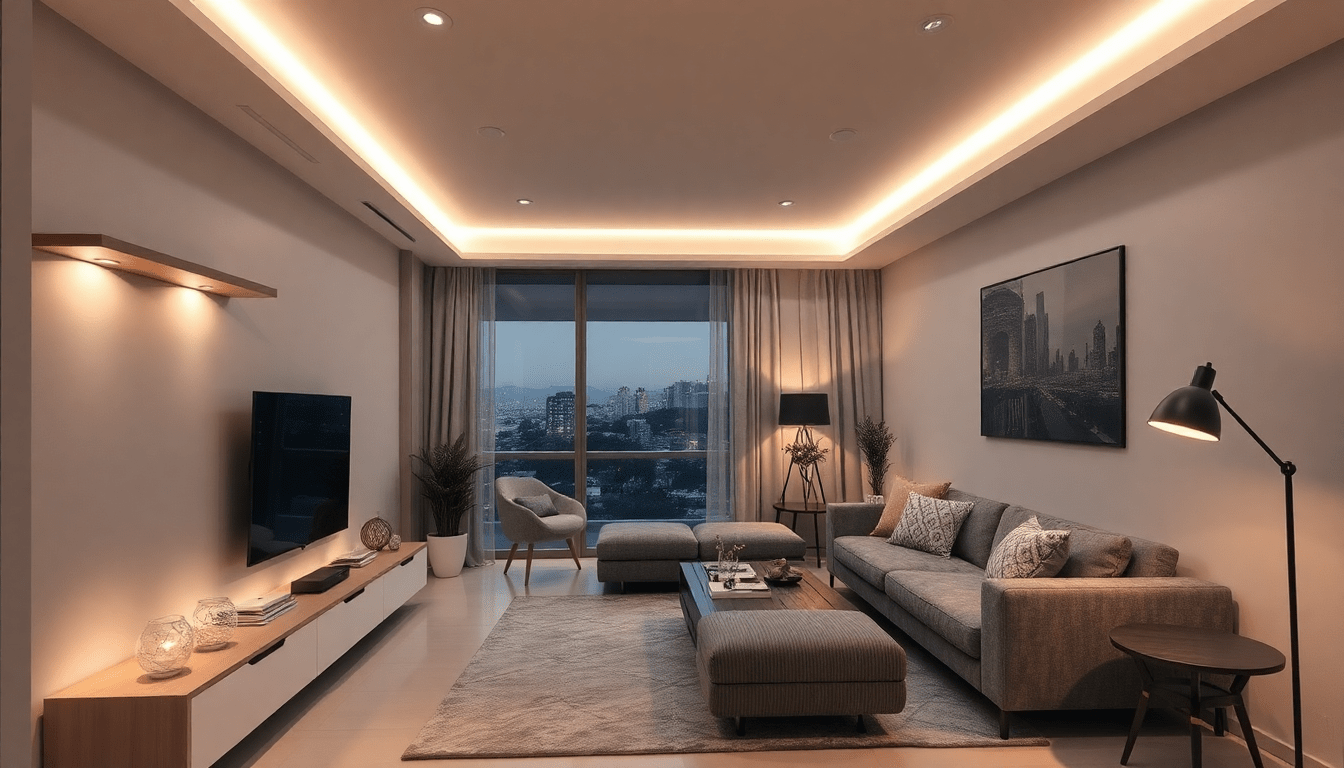
Meta: Discover AI-powered layered LEDs with circadian zonal control for small spaces, blending biophilic design with smart technology.
Introduction: Why micro-home lighting matters in 2026
As urban living nudges toward compact footprints, lighting becomes a strategic tool for health, mood, and perceived spaciousness. Micro-home biophilic lighting redefines how we illuminate small spaces by combining nature-inspired cues with AI-driven layering. The result is environments that feel larger, calmer, and more productive, without sacrificing energy efficiency or daily convenience.
The science behind biophilic lighting, circadian rhythms, and zonal control
Biophilic lighting taps into innate human responses to natural light. When we align indoor lighting with circadian biology, we support sleep quality, alertness, and overall well-being. Layering, on the other hand, introduces depth and flexibility, helping micro-spaces avoid flat lighting that can make rooms feel smaller. Zonal control takes this further by tailoring light across functional areas, so each corner behaves according to its purpose and time of day.
- Circadian-friendly color temperatures: cooler tones in the morning, warmer tones later in the day
- Layered lighting creates perceived spatial depth and reduces glare
- Zonal strategies align lighting with occupancy and activity, conserving energy
AI-powered layered LEDs: Architecture and function
Layered LEDs split illumination into ambient, task, and accent layers. Artificial intelligence manages how these layers blend, learning from occupancy, daylight, and user preferences to deliver scenes that feel natural and responsive.
- Ambient layer provides broad, comfortable illumination for general tasks
- Task layer focuses light where it’s needed, improving accuracy and reducing eye strain
- Accent layer highlights architectural features, artwork, or decor without overpowering the space
- AI optimizes color temperature, brightness, and timing to minimize energy use while maximizing comfort
Circadian zonal control: Tailoring light to daily routines in micro spaces
Circadian zonal control partitions a room into functional zones that transition through the day. Each zone can experience a personalized lighting profile that mirrors outdoor light patterns, creating a seamless indoor rhythm even in tight layouts.
- Morning zones: cool, bright light to boost wakefulness and mood
- Midday zones: balanced neutral white for focus and productivity
- Evening zones: warm, dim lighting to encourage wind-down and relaxation
- Occupancy-aware scheduling adapts to routines, improving comfort and reducing waste
Design strategies for small spaces: maximizing perceived space
In compact environments, lighting should amplify space rather than crowd it. Use a carefully planned mix of reflective surfaces, wall-wash effects, and slimline fixtures that blend with architecture while still offering rich light control.
- In-wall, under-cabinet, and coving layers to keep surfaces clean and uncluttered
- Wall wash and grazing to sculpt texture without adding bulk
- Color temperature range: 2700K to 6500K to support mood versatility
- High CRI (90+) ensures accurate color rendition in art, fabrics, and skin tones
Implementation guide: upgrading a micro-space
Upgrading involves deliberate planning and precise calibration. Here’s a practical path for integrating AI-powered layered LEDs with circadian control in a small home.
- Audit zones by function: living, cooking, sleeping, and work nooks
- Choose layered fixtures with tunable white and dimming controls
- Install smart controllers that support circadian schedules and occupancy sensing
- Calibrate color temperature per zone to match daily cues
- Program AI-driven scenes that reflect wake times, meal periods, and wind-down routines
Best practices for energy efficiency and health
Smart lighting should deliver comfort while minimizing energy use. These practices help achieve both health benefits and efficiency goals.
- Flicker-free LEDs and high CRI for healthy eye comfort and color accuracy
- Blue-light management: cooler temps in the morning, warmer temps in the evening
- Adaptive schedules that switch off when spaces are unoccupied
- Regular calibration to preserve circadian accuracy and color fidelity
Seasonal mood design: shifting ambiance without redecoration
Seasonal transitions can be achieved through lighting changes alone. Adjust color temperature, brightness, and scene timing to evoke seasonal moods while keeping decor consistent.
- Spring: brighter whites with subtle green accents for freshness
- Summer: cooler midday whites with airy, neutral accents
- Autumn: warmer ambers and amber-tinted task lighting
- Winter: cozy dim layers, rich textures, and soft, warm uplighting
Case study: a day in a micro-apartment
Imagine a studio where the living area, kitchen, and sleeping alcove share a single ceiling plane. Morning begins with a cool, bright kitchen task layer feeding into a gentle living-room ambient wash. As evening approaches, the system shifts to warm, dimmed tones across zones, while a soft nightlight glows in the sleeping nook. The AI learns occupancy patterns and refines scenes to reduce energy use while maintaining comfort across the day.
Fixtures, brands, and how to choose
- Look for tunable white ranges (2700K–6500K) and high CRI (90+)
- Prefer slim, minimal fixtures designed for small spaces with integrated drivers
- Ensure compatibility with your smart home platform and circadian algorithms
- Check warranty, maintenance support, and ease of replacement parts
Integration with smart homes and data considerations
AI-powered lighting often connects to broader ecosystems. Consider privacy, data handling, and interoperability when selecting systems. Favor devices that process data locally where possible and support open standards for future expansion.
Maintenance and calibration: keeping circadian accuracy
Regular checks ensure the system continues to deliver the promised health benefits. Schedule annual or semi-annual calibration and verify sensor alignments, dimming ranges, and color temperature accuracy across zones.
Common pitfalls and troubleshooting tips
- Overcomplicating scenes leading to confusing controls — keep core scenes simple
- Inconsistent color temperatures across fixtures — calibrate per zone
- Underestimating the importance of glare control in small spaces — plan fixture placement carefully
- Ignoring daylight impact — integrate with smart daylight harvesting for optimal results
Future trends: what to expect for micro-home lighting
As sensor technology, machine learning, and compact LED design advance, expect even tighter integration with health data, more precise circadian modeling, and modular, fashion-forward fixtures that blend seamlessly into compact interiors.
Conclusion: lighting that expands small spaces through science and design
AI-powered layered LEDs with circadian zonal control offer a practical, scalable path to healthier, more flexible lighting in micro-homes. By uniting biophilic design cues with intelligent technology, small spaces become more comfortable, visually expansive, and energy-efficient.
Visit XENTAR for more lighting, decor & furniture curated for modern homes and creative spaces.
Share:
Three-Dimensional Biophilic Lighting for Ultra-Compact Interiors: AI-Driven Layered LEDs with Circadian Zonal Control — Visit XENTAR for more lighting, decor & furniture curated for modern homes and creative spaces..
Micro-Unit Biophilic Lighting: AI-Driven Layered LEDs with Circadian Zonal Control for Wellness and Space-Saving Design