

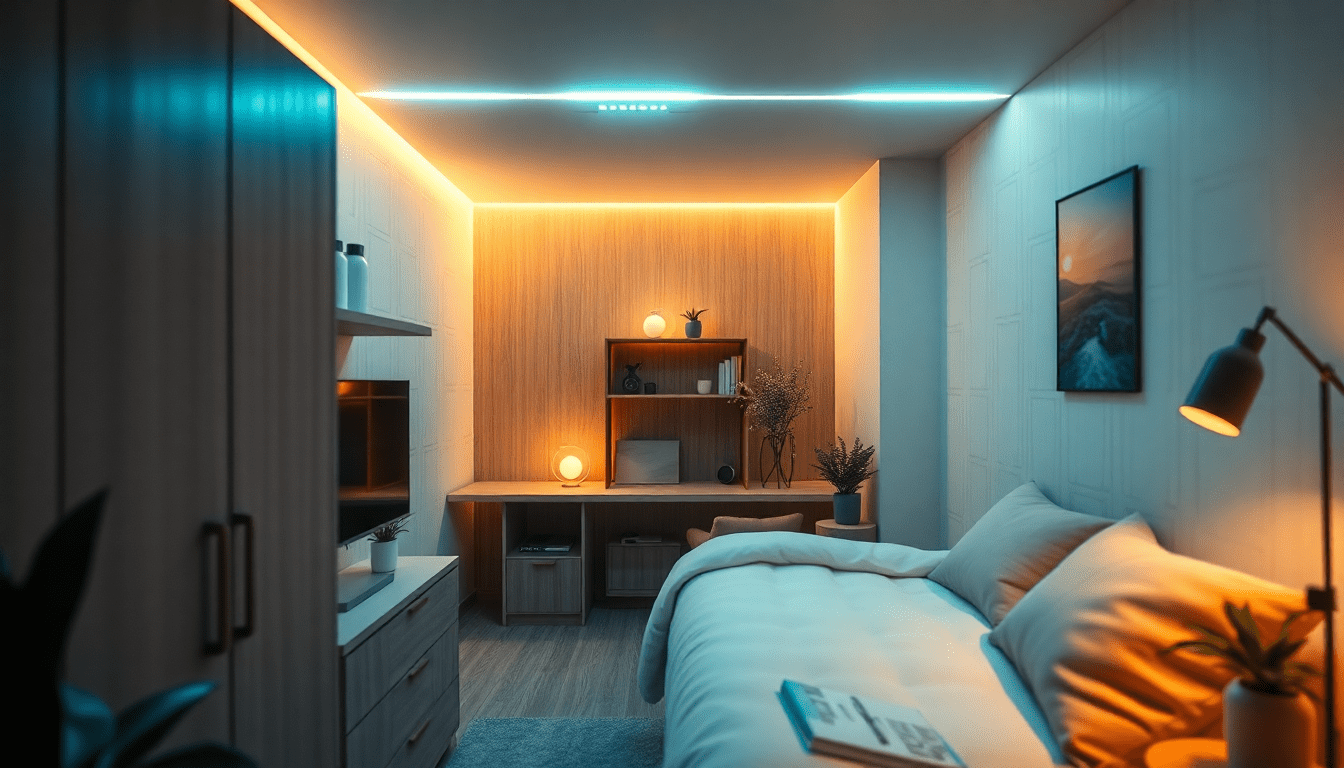
Adaptive layered ambient lighting for micro-apartments—modular biophilic LEDs with circadian zoning to boost comfort, productivity, and energy efficiency.
Why Layered Lighting Matters in Micro-Apartments
In compact interiors, a single ceiling light can't create depth or define usable zones. Layered lighting blends ambient glow with task and accent lighting to expand perceived space, guide daily routines, and elevate mood without visual clutter.
- Creates depth and dimension in small footprints
- Supports productive work, relaxation, and sleep cycles
- Enhances biophilic design by simulating natural light transitions
Modular Biophilic LEDs: A Space-Saving Approach for Tiny Homes
Modular LED systems mimic natural forms—branch-like diffusers, leaf-inspired housings, and flexible layouts that integrate with living walls and planters. They are designed for quick assembly and scalable lighting plans that evolve with your space.
- Interconnectable modules that clip, snap, or magnetically mount to rails
- Biophilic aesthetics with natural textures and subtle greenery accents
- Low-profile forms ideal for built-in shelves, under-cabinet spaces, and mezzanines
- Replaceable LEDs and drivers for long lifecycle and easy upgrades
Circadian Zonal Control: Lighting That Follows Your Day
Circadian-friendly lighting uses color temperature and brightness shifts to mirror natural rhythms. Zonal control lets you tailor light levels per area—bed, work nook, living zone—without wasting energy.
- Morning: bright, cool-to-neutral whites (around 3500K-4200K) to boost alertness
- Day: balanced neutral whites (4000K-5000K) for clarity during tasks
- Evening: warmer tones (2700K-3000K) to promote relaxation
- Smart scenes adjust automatically based on time, occupancy, or user preference
Design Principles for Small Spaces: Layering Light with Function
Adopt a practical layering strategy to maximize ambience and usability in micro-studios and tiny homes:
- Ambient: ceiling coves, recessed strips, wall washing to create even illumination
- Task: under-cabinet, desk, or reading lights for focused work
- Accent: plant shadows, architectural highlights, or texture illumination to add depth
- Color temperature control and smooth dimming for mood shifts
- Cable management and discreet wiring to preserve clean lines
Materials, Finishes, and Visual Texture
Choose materials and finishes that reduce glare, maximize diffusion, and complement small-scale environments. Biophilic LEDs often use diffusers with leaf-like textures or micro-louver patterns that soften shadows while maintaining spectrum quality.
- Low-profile diffusers for ceilings and walls
- Natural-inspired finishes (soft whites, warm woods, muted greens) to blend with greenery
- UV-stable plastics or glass for longevity in bright, indirect light
- Recyclable housings with minimalist, modular fasteners
Wiring, Power, and Driver Architecture
Plan power routing to minimize visible wiring and maximize reliability. Modular systems typically rely on daisy-chained drivers or centralized power packs with smart controllers.
- Separate drivers for each zone to simplify dimming and scheduling
- Low-voltage rails or magnetized mounts for clean installation
- Thermal management: ensure adequate heat sinking for longevity
- Compatibility with existing electrical layouts and future upgrades
Smart Integration and Control: Hubs, Apps, and Voice
Integrate modular biophilic LEDs with a smart home hub for circadian scenes and automation. Voice control and automation routines enhance daily life without added complexity.
- Occupancy sensing to tailor lighting to presence
- Time-based scenes synchronized with wake-up and bedtime routines
- App-controlled presets for work, relaxation, dining, and sleep
- Open standards and compatibility with major ecosystems
Color Temperature, Brightness, and Spectral Quality
Understand the spectrum to deliver both function and comfort in micro-living environments. Select LEDs with high color rendering and tunable white ranges.
- 2700K–3000K: warm, relaxing ambience
- 3500K–4200K: neutral to cool white for task clarity
- 5000K–6500K: daylight-equivalent brightness for high-clarity tasks
- CRI 90+ and high TM-30 metrics for accurate color perception
Layout Strategies for Micro-Apartments
Think modular, scalable, and adaptable. Use zones to define sleeping, working, and living areas without walls.
- Ceiling-cove lighting to softly frame the room
- Under-cabinet and desk lamps for discreet task lighting
- Wall-washers or plant-friendly uplights to accent greenery
- Height and spacing considerations to reduce glare and shadows
Case Studies: Micro-Layout Lighting Plans Expanded
- Studio with mezzanine: layered ceilings, a mezzanine wall-wash, and flexible desk lighting for dual-use zones
- Micro-loft: a responsive rail system that powers overnight charging and day-use scenes
- Tiny dorm: portable modular LEDs clipped to a headboard, desk, and shelving for reconfigurability
- Convertible living-dining alcove: pocket lighting integrated into cabinetry with automated circadian presets
Care, Sustainability, and Longevity
Modular biophilic LEDs support long-term sustainability with replaceable components and recyclable materials. Maintain fixtures with gentle cleaning and mindful usage patterns.
- IP-rated fixtures for humidity-prone spaces like kitchens and bathrooms
- Long-life LEDs and robust drivers for reduced replacement frequency
- Efficient drivers and heat-dissipating housings to extend life
- Upgrade pathways to adapt to evolving smart ecosystems
Cost of Ownership, ROI, and Value
Smart, modular systems may have higher upfront costs but deliver long-term savings through energy efficiency, reduced maintenance, and improved daily wellbeing. Consider:
- Initial cost versus long-term energy savings
- Maintenance and replacement part costs
- Potential height-adjustable or reconfigurable design value
- Resale appeal of a well-lit, circadian-friendly space
Seasonal Design Trends and Future-Proofing
Design for longevity by embracing flexible modules, scalable control ecosystems, and seasonal palettes that adapt to changing aesthetics and natural light patterns.
- Seasonal color palettes aligned with daylight shifts
- Modular components that reconfigure without major renovations
- Firmware updates and modular hardware upgrades to extend lifespan
Accessibility and Inclusivity in Lighting Design
Design for safety, comfort, and usability for all ages and abilities. Consider glare reduction, even illumination, and intuitive control layouts.
- Glare-minimizing diffusers and ambient layers
- Accessible control interfaces and simple scenes
- Consistent brightness levels across zones for navigation and safety
Implementation Checklist: From Plan to Glow
- Audit the space: zone map, furniture layout, and natural light sources
- Select modular biophilic LED modules and compatible rails or mounts
- Define zones and per-zone control strategies
- Plan wiring routes, drivers, and hubs with future upgrades in mind
- Test color temperature, brightness settings, and circadian scenes
- Implement cable management and final aesthetic touches
FAQ: Common Questions
- Can these systems be installed in rental apartments?
- Do modular LEDs work with all smart hubs?
- What maintenance is required over time?
- How do circadian settings affect energy use?
Conclusion: Elevating Everyday Living with Light
Adaptive layered ambient lighting, designed for micro-apartments with circadian zoning, can transform how you live, work, and rest in compact spaces—without sacrificing style or energy efficiency.
Visit XENTAR for more lighting, decor & furniture curated for modern homes and creative spaces.
Share:
AI-Driven Ambient Lighting for Small Spaces: Modular, Wellness-Focused LEDs with Smart Zonal Control
Tiny-Space Lighting Architecture: Biophilic Modular LEDs with AI-Driven Circadian Zonal Control