

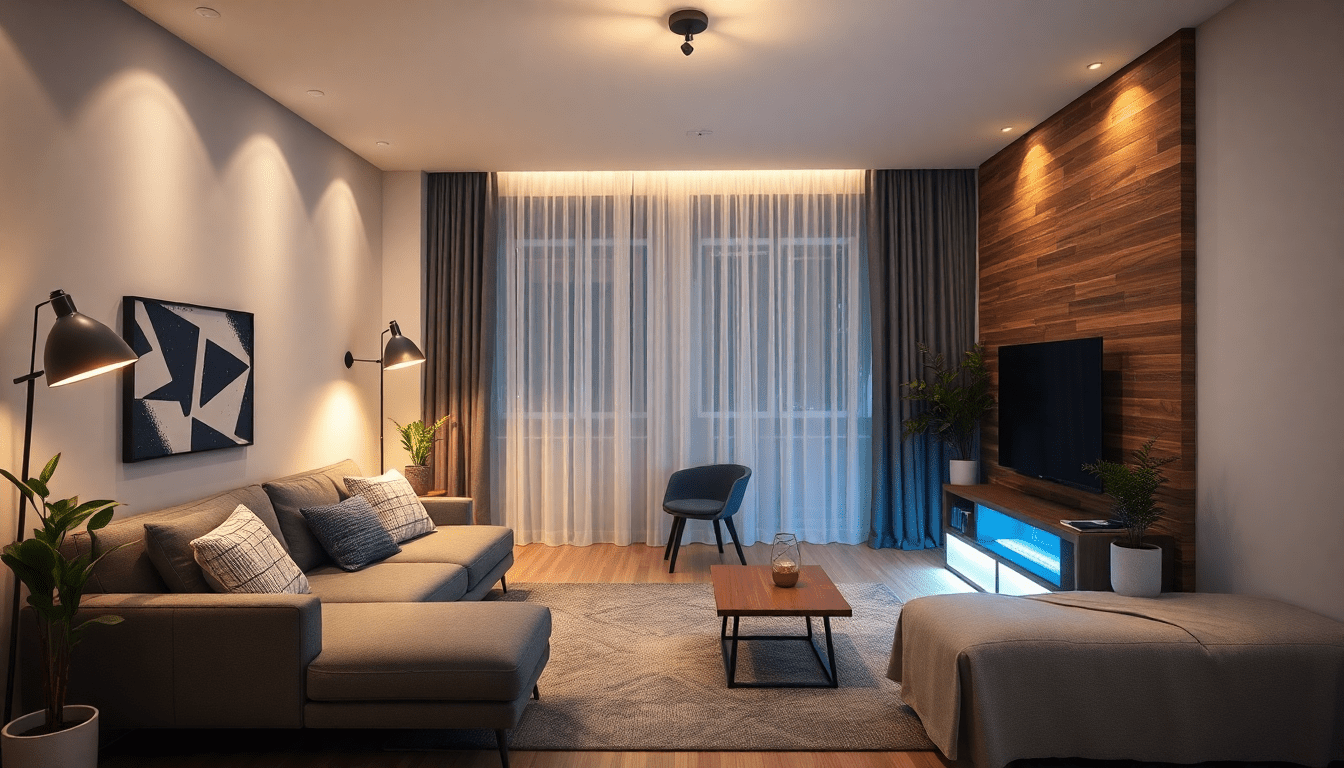
In 2026, compact living spaces demand smarter lighting that does more with less. AI-powered daylight-reproducing LEDs enable layered illumination that adapts to tasks, moods, and daily rhythms, transforming small rooms into flexible environments without visual clutter. This article dives into how daylight-reproducing LEDs, paired with personalizable zonal control, can elevate every corner of a compact home—from studios and micro-apartments to open-plan kitchens-with-nooks—while delivering energy efficiency and style.
Overview: Why Layered Lighting Matters in Small Spaces
Layered lighting builds depth, reduces glare, and defines zones in compact homes where square footage is precious. A thoughtful mix of ambient, task, and accent lighting creates the perception of space, highlights architectural features, and supports tasks with precision. By using AI to coordinate daylight-like spectra and by enabling zonal control, homeowners can tailor light to each area without switching between multiple devices.
- Ambient: Base illumination that sets the mood and reduces contrast shocks
- Task: Focused light for reading, cooking, or crafting
- Accent: Visual interest via artwork, textures, or architectural details
AI-Powered Daylight-Reproducing LEDs: The Science Behind the Glow
Daylight-reproducing LEDs simulate natural sun patterns by adjusting color temperature (roughly 2700K warm white to 6500K cool daylight) and brightness in real time. AI models analyze external daylight, weather, occupancy, and circadian cues to choreograph light that aligns with your body clock and daily activities. Benefits include:
- Dynamic color temperature to mimic sunrise, noon daylight, and sunset
- Adaptive brightness to maintain comfortable luminance across rooms
- Better color fidelity (high CRI, often CRI 90+), which matters for makeup, fabrics, and art
Personalizable Zonal Control: Lighting That Understands Your Space
Zonal control divides a home into independently controlled lighting zones. In compact layouts, this feature is transformative: you can adjust a kitchen island, a reading nook, or a hall without affecting other areas. Key capabilities include:
- Zone-by-zone brightness and color tuning for precise ambience
- Custom scenes: Morning wake-up, focus work, cozy dinner, and cinema mode
- Smart scheduling and occupancy-aware adjustments to save energy
Color Temperature, CRI, and Spectral Quality for Real-World Tasks
Choosing the right spectral characteristics matters as much as brightness. For everyday tasks, look for:
- Tunable white from 2700K to 6500K
- High CRI (≥90) to render colors accurately in textiles, artwork, and makeup
- Low flicker and stable color output for comfort during long sessions
For living areas used for screens or video calls, consider slightly cooler tones during the day to reduce eye strain, and warmer tones in the evening to support relaxation.
Practical Design Guide for Compact Homes
Smart, space-efficient lighting requires careful fixture selection and layout. Here are design rules of thumb tailored to small footprints:
- Choose dimmable, tunable white fixtures with high CRI (≥90) for accurate color rendering
- Prefer adjustable recessed, track, or wall-mounted fixtures to maximize flexibility without visual clutter
- Integrate with smart hubs (Alexa, Google Home, HomeKit) for seamless control and scheduling
- Incorporate daylight sensors and occupancy sensors to automate transitions and save energy
- Use light-colored surfaces, mirrors, and reflective decor to amplify perceived brightness
- Plan for future-proofing: compatibility with Matter and evolving smart lighting standards
Implementation Roadmap: From Concept to Reality
- Audit each room’s tasks, daylight exposure, and furniture layout
- Map lighting zones and select fixtures per zone (ambient, task, accent)
- Calibrate AI daylight profiles, color temperature ranges, and occupancy rules
- Set up scenes: morning, day, evening, movie, reading, and cooking
- Test, measure, and refine based on feedback and seasonal daylight shifts
Real-World Scenarios: Skins for Common Rooms
Browse practical configurations for typical compact homes:
- Studio apartment with multi-use zones: living, sleeping, and kitchenette, all controllable via a single app
- One-bedroom with a home office: daylight-reproducing LEDs that shift to focus mode during work hours
- Kitchen-dining alcove: adjustable brightness for meals, meals-with-friends, and late-night snacks
- Narrow hallway and entry: soft ambient glow that guides without glare
Smart Home Ecosystem Compatibility: What to Look For
When shopping for AI-driven lighting, compatibility matters as much as features. Prioritize:
- Works with major ecosystems: Amazon Alexa, Google Home, Apple HomeKit
- Supports Matter or future standard interoperability
- Supports voice control, room-based scenes, and routine automation
- API access or developer-friendly hubs for advanced automation
Energy Savings, ROI, and Sustainability
Daylight-reproducing LEDs paired with zonal control can reduce energy use by aligning light output with actual needs. Benefits include:
- Targeted lighting minimizes waste in unoccupied zones
- Dynamic dimming reduces power when daylight suffices
- Longer lifespans and lower heat output compared to traditional lighting
Maintenance, Durability, and Longevity
Smart lighting systems reduce maintenance by automating calibration and monitoring. Consider:
- Software updates to improve algorithms and features
- Robust drivers and heat management for longevity
- Modular fixtures that simplify replacements without re-wiring
Seasonal Design Trends and Your Lighting Plan
Seasonal shifts influence color choices and brightness preferences. Seasonal tips:
- Spring: Cooler tones for productivity and freshness
- Summer: Brighter, daylight-leaning scenes for longer daylight hours
- Autumn: Warmer whites and coziness for early evenings
- Winter: Rich ambience with balanced warm-white and cooler accents
Accessibility and Usability in Smart Lighting
Make lighting accessible for all users by embracing:
- Large, intuitive app interfaces and voice control
- Automatic scene presets that don’t require complex configuration
- Fallback controls in case of network issues
Common Pitfalls and How to Avoid Them
Even the best systems can stumble without proper planning. Common mistakes include underestimating glare, over-automation, and choosing fixtures without adequate dimming range. Solutions:
- Test fixture proximity and glare in each zone
- Ensure dimming supports smooth, flicker-free operation
- Keep a simple, scalable zoning plan rather than over-segmenting
Future Trends: What Comes Next for AI Lighting in Small Spaces
Expect advances in sensor fusion, adaptive circadian lighting, and more seamless integration with smart home ecosystems. Look for:
- Deeper AI personalization based on daily routines
- Enhanced daylight harvesting that optimizes interior lighting against outdoor conditions
- Smarter energy analytics that guide users toward more efficient habits
Case Studies: Real Homes, Real Transformations
Consider these hypothetical but representative case studies that illustrate the impact of AI daylighting in compact spaces:
- Case A: A 350 sq ft studio with three zones that transitions from work to rest via scenes
- Case B: A 420 sq ft one-bedroom with a compact kitchen island and reading nook
- Case C: A city micro-apartment with a corridor lighting system that guides guests and reduces clutter
Implementation Checklist: Quick Start
- Audit daylight, room usage, and furniture layout
- Design zones and select tunable, dimmable fixtures
- Install daylight sensors and occupancy sensors where it makes sense
- Configure AI daylight profiles and scene presets
- Iterate after a 2–4 week period to refine scenes and schedules
Conclusion: Elevating Small Spaces with AI-Driven Lighting
Smart Layered Lighting with Daylight-Reproducing LEDs and Personalizable Zonal Control is not just a convenience—it's a design strategy for modern compact homes. By combining high-quality light, intelligent adaptation, and flexible zoning, you can create environments that feel larger, more comfortable, and more productive while consuming less energy.
Visit XENTAR for more lighting, decor & furniture curated for modern homes and creative spaces.
Share:
Wellness-First Circadian Lighting for Small Homes: AI-Optimized Modular Biophilic LEDs with Zonal Architecture.
Tiny-Space Glow: AI-Powered Layered Biophilic Lighting with Dynamic Zonal Control for Micro-Apartments.