

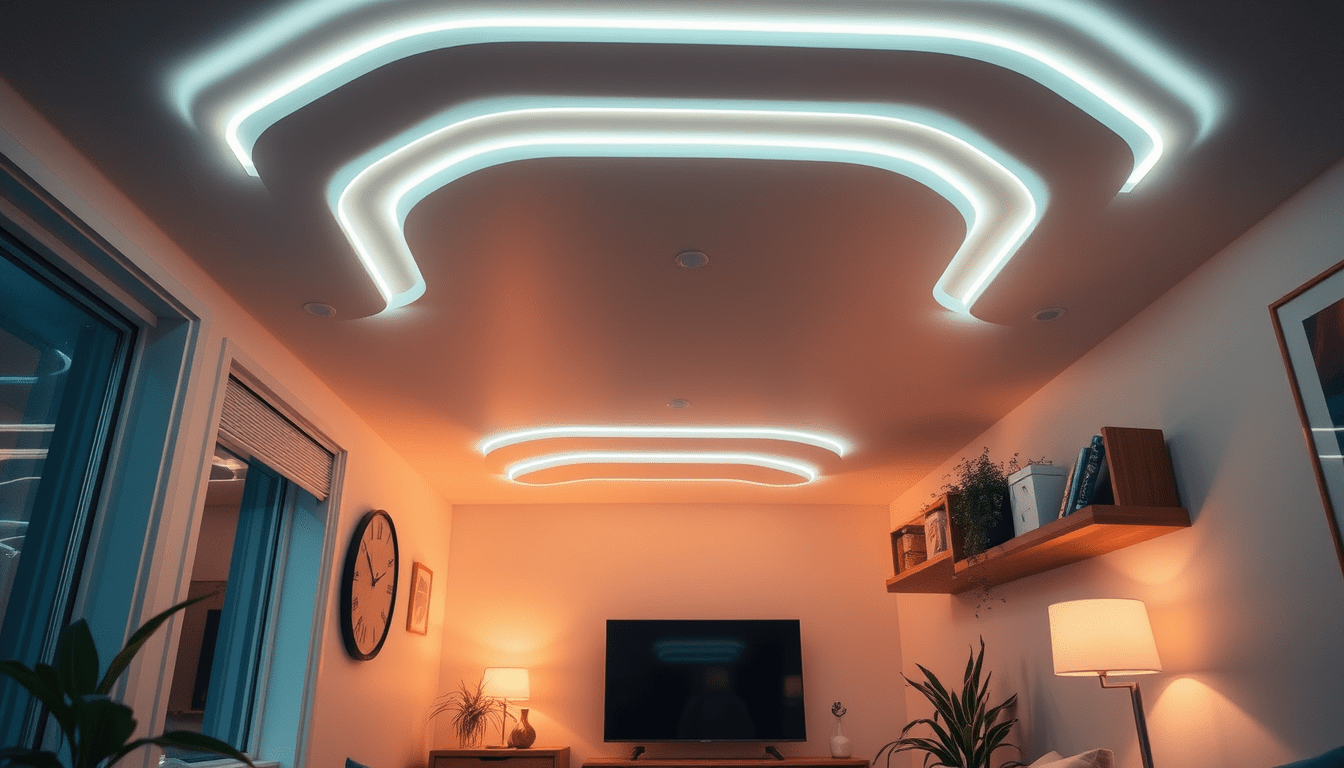
In the world of compact living, lighting is more than a convenience—it is a core element of wellness, space perception, and daily rhythm. Biophilic circadian lighting combines nature-inspired design with precision AI controls to support healthful sleep, steady mood, and sustained focus in micro-interiors. By leveraging AI-driven layered LEDs, tiny homes can achieve nuanced spectral control, adaptive brightness, and intelligent scene management without sacrificing ceiling height or aesthetic clarity.
What is Biophilic Circadian Lighting?
Biophilic circadian lighting mimics the sun’s natural trajectory across the day, adjusting color temperature and intensity to align with human physiology. In tiny homes, this translates to softer, warmer light in the evening and bright, daylight-inspired illumination during the morning and work hours. The result is a space that feels larger, more inviting, and healthier to inhabit, with reduced disruption to circadian processes and improved visual comfort.
AI-Driven Layered LEDs: The Core Technology
Layered LED fixtures use multiple spectral layers that can be tuned independently, creating depth and texture in small rooms. An AI engine learns occupancy patterns, routines, and user preferences to seamlessly adapt color temperature, brightness, and scene profiles in real time. The technology stack typically includes:
- Layered spectrum: warm (2700–3000K), neutral (3500–4300K), cool (5000K+)
- Circadian-aware scheduling aligned with daylight progression
- Occupancy detection and daylight harvesting for energy efficiency
- Low flicker, high CRI, and glare reduction for extended comfort
- Machine-learning-based scene adaptation that improves with use
Together, these elements create lighting that feels intuitive yet technologically sophisticated—perfect for micro-interiors where every watt and every inch matters.
Benefits for Tiny Homes and Micro-Interiors
Small spaces demand lighting that is flexible, unobtrusive, and aesthetically cohesive. AI-driven layered LEDs deliver on these needs in several key ways:
- Spatial flexibility: Layered LEDs can illuminate work zones, cooking nooks, and sleeping areas without requiring multiple separate fixtures.
- Wellness alignment: Circadian tuning supports sleep quality, alertness, and mood regulation, reducing stress and improving daytime functioning.
- Visual expansion: Strategic wall-wash and cove lighting creates perceived depth, making compact rooms feel larger.
- Glare control and color fidelity: High-CRI lighting with smooth dimming minimizes eye strain during long reading or work sessions.
- Energy efficiency: AI optimizes output by avoiding overlighting idle zones and leveraging natural daylight when available.
Design Strategies for Micro-Interiors
Implementation in micro-spaces benefits from a thoughtful layering approach that respects architecture and daily life.
- Layer across zones: entry, kitchen, workspace, dining, and bedroom to ensure consistent illumination throughout the day.
- Wall-wash and cove lighting: Use indirect lighting to visually expand narrow rooms and soften transitions between surfaces.
- Programmable scenes: Create routines that reflect wake, work, relax, and sleep patterns with seasonal adjustments (e.g., brighter, cooler mornings; warmer, softer evenings).
- Smart home integration: Ensure the system is compatible with voice assistants and mobile apps for convenient control.
- Minimalism in fixtures: Choose modular, compact modules that fit within limited ceilings and under-shelf spaces.
Smart Features and Energy Efficiency
Smart control isn’t just convenience—it’s a sustainability lever in small spaces. AI-driven tuning reduces waste and adapts to real-time conditions:
- Adaptive zoning: Dims or elevates output by zone based on occupancy and activity.
- Daylight synchronization: Calibrates artificial light to complement available daylight, lowering electric load.
- Spectral fidelity: Maintains circadian-friendly spectra at all levels of brightness.
- Predictive maintenance: AI flags potential dimming or driver issues before they affect performance.
Implementation Roadmap for Tiny Homes
Rolling out a biophilic circadian LED system in a micro-interior requires careful planning. Here’s a practical roadmap:
- Assess space and ceiling geometry: Identify feasible mounting points and ensure heat dissipation for compact fixtures.
- Choose modular, scalable LEDs: Start with core zones (entry, living, sleep) and extend as space or budget allows.
- Plan circuits and power: Ensure dedicated circuits for lighting and backups for critical zones to maintain circadian functionality during outages.
- Define calibration targets: Establish preferred color temperatures for different times of day and occupants’ routines.
- Integrate with smart platforms: Confirm compatibility with existing home assistants and hub devices for seamless control.
- Establish firmware update path: Prefer systems with remote updates to access ongoing AI refinements.
Choosing the Right System for Your Micro-Interior
Dimensions, budget, and future plans drive selection. Consider these criteria:
- Modularity and scalability: Can the system expand with your space or furniture changes?
- Open APIs and customization: Does the platform allow for personal scene coding or third-party integrations?
- Warranty and support: What coverage exists for drivers, modules, and control software?
- Energy performance: Look for data on lumens per watt, flicker metrics, and dimming range.
- Maintenance requirements: How often are firmware updates and component replacements needed?
Maintenance and Longevity
Well-designed LED systems last longer when paired with robust drivers and quality LEDs. For micro-interiors, maintenance efficiency is critical:
- Schedule annual checks: Inspect connections, verify color temperature accuracy, and ensure AI profiles still match routines.
- Firmware governance: Maintain up-to-date AI models to benefit from improvements in circadian science.
- Component resilience: Favor low-flicker drivers and high-CRI LEDs to sustain color fidelity over time.
- Dust management: Keep fixtures clean to preserve optical performance in compact spaces with limited airflow.
Real-World Scenarios: Tiny Homes, RVs, and Studio Apartments
These micro-forms of living benefit particularly from flexible lighting design. Consider:
- Tiny homes on wheels: Compact layer arrangements that provide task lighting in work nooks while maintaining a calm sleeping zone.
- Studio apartments with multi-use spaces: Switch between bright, cool lighting for cooking and warm, dim lighting for lounging or dressing.
- RV or camper interiors: Lightweight, modular fixtures that can be mounted on convertible furniture and travel-ready power systems.
Seasonal and Circadian Adaptation
Seasonality influences daylight patterns and user energy levels. Build seasonal adjustments into scenes and AI models:
- Spring/Summer: Increase midday brightness to counter longer days and maintain alertness in dim interiors.
- Autumn/Winter: Emphasize warmer, lower-intensity evenings to promote wind-down and sleep quality.
- Travel and routine changes: Use portable scenes that adapt to new wake times or work schedules without reconfiguring the entire system.
Aesthetic Considerations: Color Temperature, Materiality, and Finishes
Wellness lighting should complement interior design. Consider these aesthetics-informed choices:
- Finish and concealment: Choose fixtures that blend with walls, cabinetry, and furniture to prevent visual clutter.
- Color temperature zoning: Subtle shifts (e.g., 2700K–3200K in evenings, 4000K–4300K during daytime tasks) can enhance perception of space while supporting circadian cues.
- Material grounding: Use warm metal tones or natural textures to produce a tactile coherence with biophilic design elements (plants, wood, stone).
- Glare and brightness management: Opt for fixtures with diffusers or indirect lighting to maintain a calm atmosphere in small rooms.
Common Pitfalls and How to Avoid Them
Even well-conceived systems can falter if misapplied. Watch for:
- Over-segmentation: Too many zones can complicate control without delivering proportionate gains in perceived space.
- Inflexible schedules: Rigid scenes that don’t adapt to changing routines reduce daily usability.
- Inconsistent color rendering: Low CRI or uneven spectral balance can ruin the wellness goals of circadian lighting.
- Underestimating power and heat: Small fixtures still require adequate power planning and heat management for longevity.
Conclusion: Elevate Wellness with Light in Small Spaces
Biophilic circadian lighting, powered by AI-driven layered LEDs, offers a strategic path to healthier living in tiny homes and micro-interiors. It harmonizes wellness science with design pragmatism—delivering energy efficiency, space perception, and daily comfort without compromising aesthetics or function. As the technology evolves, these systems will become more accessible to a broader range of spaces, turning small rooms into big opportunities for wellbeing.
Visit XENTAR for more lighting, decor & furniture curated for modern homes and creative spaces.
Share:
Biophilic Ambient Lighting for Micro-Interiors: AI-Driven Circadian Zonal Control That Syncs with Seasonal Decor Trends
Smart Ambient Lighting for Petite Spaces: Biophilic Textures & AI Mood Scenes for Micro-Interiors