

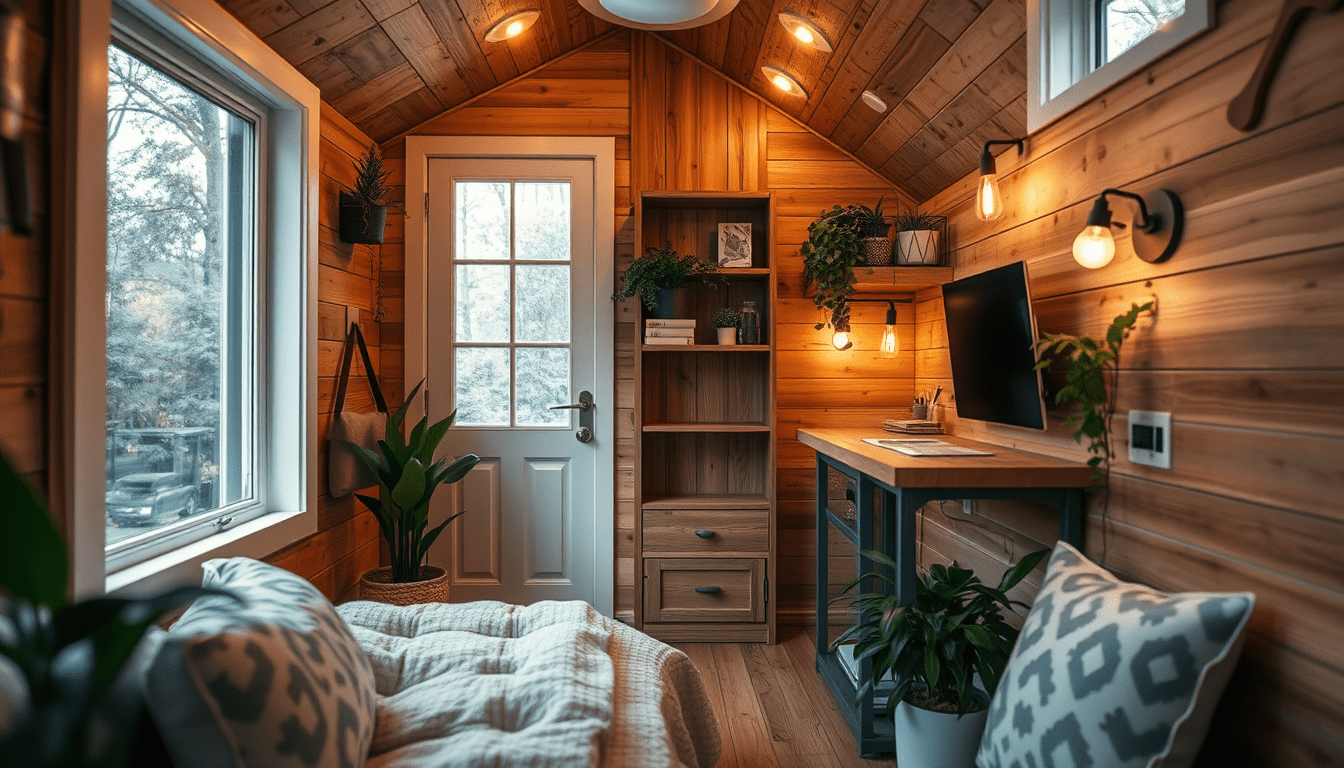
Explore adaptive biophilic lighting for tiny homes—AI-led LEDs, zonal control, and energy-smart design for cozy, healthier spaces.
Why Tiny Homes Benefit from Biophilic Lighting
In compact living, lighting is not just visibility—it's a design strategy that shapes perceived space, mood, and health. Biophilic lighting uses natural cues such as daylight patterns, warmer temperatures at night, and gentle color transitions to create openness and well-being in small footprints.
AI-Optimized LED Modules: The Brain Behind the Glow
LED modules with embedded AI continuously learn from occupancy patterns, daylight availability, and user preferences to deliver comfort, efficiency, and consistent color quality.
Edge AI and Local Processing
On-device inference keeps data on site, reduces latency, and minimizes reliance on constant cloud connections—ideal for remote tiny homes or off-grid contexts.
Privacy and Security Considerations
Design with data minimization and local storage in mind. Prefer systems that offer opt-in data sharing and transparent privacy controls.
- Real-time adaptation of color temperature (2700K–6500K) and brightness
- Learning-based scene scheduling aligned to personal routines
- Calibrated color rendering to maintain plant colors and skin tones
Dynamic Zonal Control: Turning Small Spaces into Smart Spaces
Divide the layout into zones—living, sleeping, kitchen/work, and entry—and apply independent lighting scenes while preserving visual harmony across boundaries.
- Independent ambient, task, and accent layers per zone
- Smart transitions that minimize glare and eye strain during routine changes
- Energy efficiency through selective illumination when zones are unoccupied
Sensor Suite and Data Flows
Leverage a compact sensor suite to drive adaptive lighting with minimal overhead.
- Occupancy sensors (PIR or radar) to detect presence
- Daylight and ambient light sensors to scale artificial light with natural light
- Color temperature and CRI sensors to maintain accurate color rendering
- Local controller with secure edge processing and optional cloud analytics
Data flows are designed with privacy in mind: sensor data remains on the local network where possible, with optional anonymized uploads for optimization.
Design Strategy for Small Footprints
- Layered lighting: ambient, task, and accent layers to sculpt space without crowding it
- Biophilic cues: daylight-mimicking white temperatures, plant-inspired greens, and natural textures
- Compact fixtures and modular drivers that fit tight ceilings or wall cavities
- Smart scenes for daily routines (wake, work, unwind, sleep) that auto-adjust with solar patterns
- High-CRI rendering (CRI 90+) to reveal true colors in small rooms
Implementation Guide: From Plan to Pilot
- Conduct a space and daylight audit, mapping windows, reflectivity, and typical usage
- Select AI-enabled LED modules with tunable white, dimming, occupancy sensing, and easy calibration
- Map zones and design scenes aligned to activities and circadian health goals
- Plan wiring, power budgets, and driver placement to minimize ceiling clutter
- Install, calibrate color temperature ranges, sensor thresholds, and scene timings
- Prototype in real-world conditions and iterate with seasonal daylight changes
Case Studies: Tiny Apartment, Micro-Home, Cabin Loft
Case A — 250 sq ft studio: Dynamic zoning reduces glare during daytime work and creates a restful glow at night. Wake/sleep schedules are synchronized with natural light, and task lighting retracts as occupancy shifts.
Case B — 380 sq ft micro-home: Daylight-mimicking cues expand perceived space; zones seamlessly blend for flexible living and compact routines, with energy savings from occupancy-based dimming.
Case C — Cabin loft: Warmer tones at night with cooler daylight accents during the day; local edge AI maintains color fidelity on varied activity schedules and seasonal shifts.
Benefits: Comfort, Health, and Efficiency
- Supports circadian health through tunable white and schedule-based shifts
- Reduces energy use via occupancy sensing and zonal targeting
- Improves perceived space with balanced luminance and color fidelity
- Enhances mood and productivity in working-from-home nooks
Maintenance and Troubleshooting
Regular maintenance keeps systems reliable in tight spaces.
- Ventilate and clean drivers and diffusers to prevent heat buildup
- Update firmware and recalibrate sensors seasonally
- Check sensor alignment and recalibrate zones to reflect daylight changes
- Ensure backup power or uninterruptible power supplies for critical zones
Cost Considerations and ROI
Investment ranges vary by fixture quality, control platform, and sensor density, but most tiny-home cases report a payback of 1–3 years through energy savings and improved occupant comfort.
- Initial costs: AI-enabled LED modules, zonal drivers, and sensors
- Operating costs: lower due to occupancy-based dimming and daylight-aware tuning
- ROI drivers: energy savings, longer bulb life from proper dimming, improved well-being and productivity
Future Trends in AI-Optimized Lighting for Tiny Homes
- tighter integration with solar power and battery storage for off-grid living
- adaptive diffusers and tunable optics to further sculpt small spaces
- mesh of smart devices, mobile apps, and voice assistants for seamless routines
- improved privacy-preserving learning with on-device models
FAQs
- Q: What is adaptive biophilic lighting? A: Lighting that mirrors natural patterns and health-focused cues using AI-driven control.
- Q: Can it work offline? A: Many systems support offline modes with local processing; cloud-based AI enhances personalization.
- Q: Is it energy-efficient? A: Yes, via zonal control, occupancy sensing, and daylight-aware dimming.
- Q: Rough cost range? A: Costs vary, but payback is often 1–3 years with typical small-space layouts.
- Q: How hard is installation? A: It depends on existing wiring; many tiny-home upgrades are feasible with retrofit-friendly modules.
Conclusion
Adaptive biophilic lighting with AI-optimized LEDs and dynamic zonal control offers tiny homes a path to healthier, more efficient, and visually expansive living environments. By embracing modular technology and site-specific design, homeowners can enjoy wellness-aligned illumination without compromising space or style.
Visit XENTAR for more lighting, decor & furniture curated for modern homes and creative spaces.
Share:
Tiny-Space Glow: AI-Powered Layered Biophilic Lighting with Dynamic Zonal Control for Micro-Apartments.
Modular Biophilic Lighting for Urban Micro-Spaces: AI-Synced LEDs with Circadian Zonal Control for Mood and Energy