

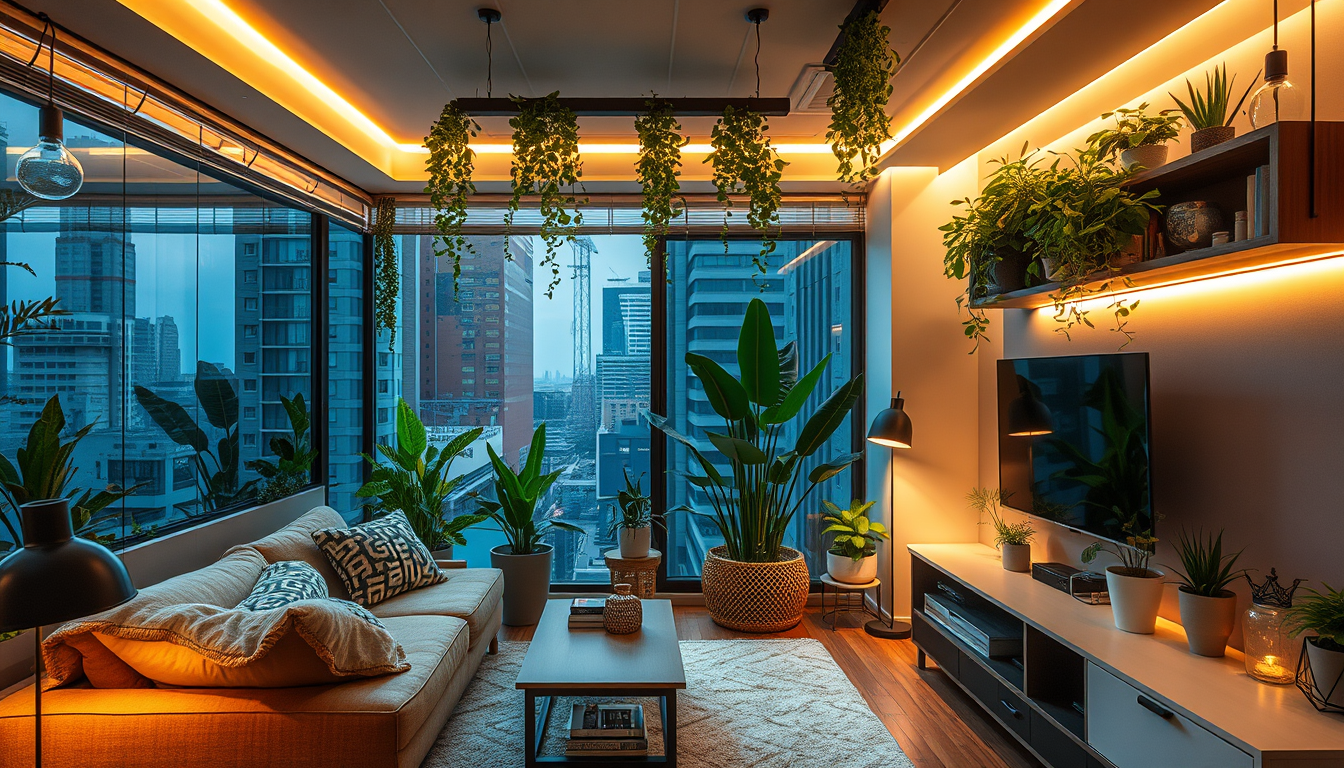
Adaptive biophilic ambient lighting blends nature-inspired cues with AI-powered control to elevate compact urban living spaces and support wellbeing.
Overview: Why This Lighting Paradigm Matters in Urban Micro-Homes
In small footprints, light design has outsized impact on mood, productivity, and perceived space. Biophilic lighting mimics daylight patterns, weather, and plant-season rhythms to create a sense of openness and comfort.
- Boosts circadian alignment for wakeful mornings and restful nights
- Enhances visual comfort in multi-use rooms such as studios and lofts
- Reduces energy use through layered LED strategies and intelligent controls
Technology Core: AI-Driven Layered LEDs
Layered LEDs separate the base ambient layer from task lighting and subtle accents. An AI engine analyzes occupancy, daylight cues, and user preferences to adjust color temperature, intensity, and scene timing in real time.
- Base ambient: a soft, evenly distributed glow that defines the room without glare
- Mid-layer task: focused illumination for reading, writing, or cooking
- Accent layer: color-tuned highlights to sculpt space and emphasize architectural details
Circadian Zonal Control: Personalizing Light by Time and Zone
Circadian zoning translates biological rhythms into lighting schedules that adapt to personal routines and seasonal changes. Zones allow distinct scenes in living, sleeping, and transition areas while maintaining a cohesive design language.
- Automatic day-night cycles synchronized to sunrise/sunset or user-defined schedules
- Zonal overrides for naps, workouts, or late-night reading
- Daylight harvesting: sensors dim artificial light when sunlight is abundant
Spatial Design Strategies for Urban Micro-Homes
- Map zones early: dedicate living/working, sleeping, and transition areas
- Choose warm dimmable whites for evening routines and cooler tones for daytime tasks
- Use layered lighting to avoid glare and to carve depth in compact layouts
Implementation Blueprint for Apartments and Tiny Homes
- Evaluate natural daylight angles, ceiling height, and furniture placement
- Define AI-driven scenes that reflect daily routines and seasonal shifts
- Select fixtures with tunable white, high CRI, and precise zoning capabilities
- Integrate with a smart hub or app for centralized control
- Calibrate Circadian schedules and test comfort across rooms
Smart Home Ecosystems and Future-Proofing
Interoperability with Matter, HomeKit, Google Home, and Alexa enables a unified lighting experience alongside climate, shades, and audio systems.
Color Science, White Tones, and Biophilic Palettes
Biophilic palettes lean on natural whites and nature-inspired hues. Target tunable white ranges from 2700K to 6500K with CRI 90+ to render plants and fabrics faithfully and to support circadian shifts.
- 2700K-3000K: warm evenings, cozy atmospheres
- 3500K-4200K: neutral daylight for work and meals
- 5000K-6500K: bright, energetic daytime tasks
Fixture and Wiring Considerations for Micro-Units
Compact spaces benefit from discreet fixtures, recessed or track-based layering, and driverless or smart-driver options that minimize clutter.
- Small-diameter, low-profile fixtures to preserve ceiling height
- Flexible drivers enabling per-zone dimming and color control
- Easy integration with existing electrical plans and furniture layouts
Room-by-Room Scenarios: Micro-Home Case Studies
- Studio apartment: daytime work light with a cool white mid-layer, transitioning to warm ambience in the evening
- Bedroom nook: circadian sunset cues paired with gentle sunrise simulation for wake-up
- Kitchenette: layered task lighting over counters with subtle uplighting for depth
- Loft with mezzanine: zoning that differentiates upper and lower levels while maintaining cohesion
Maintenance, Calibration, and Longevity
Scheduled calibration keeps color accuracy and circadian timing on track. Regular firmware updates enhance efficiency and features without hardware changes.
- Annual color calibration and zone recalibration after major furniture changes
- Sensor recalibration to account for new daylight patterns
- Dust management and fixture cleaning for sustained performance
Seasonal Design Trends and Rhythm Shifts
Seasonal rhythms influence color temperature choices and brightness levels. Spring invites brighter, cooler daylight tones; autumn invites warmer, cocooning atmospheres.
- Spring refresh: cool whites with botanical greens
- Summer brightness: high-contrast accents for outdoor-inspired spaces
- Autumn warmth: amber accents and soft dusk cues
- Winter cocooning: increased warmth and gentle, low-intensity layers
Future-Proofing: Open Standards and Modularity
Adopt modular fixtures and standards that support retrofits, firmware upgrades, and scalable zoning as new AI features emerge.
- Choose fixtures with swappable drivers and future-ready firmware
- Prefer ecosystems that support Matter and broad device compatibility
- Plan for future sensors and daylight data integration
Practical Quick-Start Guide for Designers and Homeowners
- Start with a grid-based plan to ensure even light distribution in tight spaces
- Define a circadian schedule aligned to your daily routine and local seasons
- Implement layered LEDs with tunable white and soft color accents
- Test, iterate, and calibrate across rooms to balance warmth and clarity
Conclusion: Elevating Small Spaces with Healthy, Flexible Light
AI-driven layered LEDs with circadian zoning unlock wellness, productivity, and comfort in urban micro-homes, turning compact spaces into dynamic living environments.
Visit XENTAR for more lighting, decor & furniture curated for modern homes and creative spaces.
Share:
Smart Ambient Lighting for Petite Spaces: Biophilic Textures & AI Mood Scenes for Micro-Interiors